


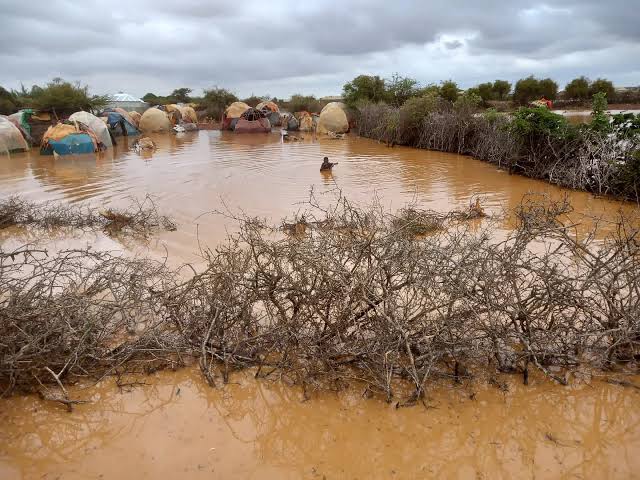
The United Nations’ migration agency has warned that nearly 874,000 people in Somalia could be forced from their homes between October and December 2026 as the threat of widespread flooding grows amid forecasts of above-normal rainfall linked to strengthening El Niño conditions.
The International Organization for Migration (IOM), working with the Danish Refugee Council, projects that flooding could account for 92 per cent of the anticipated displacement during the three-month period, raising fears of another major humanitarian emergency in a country where many families have already endured displacement and the loss of their livelihoods.
The warning comes as the rainy season gathers pace, with rising river levels and heavy rainfall already raising concerns in several parts of the country. Humanitarian agencies are racing to prepare vulnerable communities, but IOM says a severe funding shortfall is limiting efforts to protect people before conditions deteriorate.
For thousands of families living in flood-prone areas, the coming months could bring the destruction of homes, the loss of crops and livestock, and the disruption of access to clean water, healthcare and other essential services.
Rising rivers raise fears of flooding
The Jubba River is approaching flood levels in Dollow, while the Shabelle River is rising in Jowhar. In Baidoa, heavy rainfall has already damaged homes and forced families to flee affected neighbourhoods, providing an early indication of the dangers that heavier rains could bring.
Beletweyne and Gaalkacyo are among the locations facing particularly serious displacement risks. IOM estimates that approximately 229,000 people in Beletweyne and another 82,000 in Gaalkacyo could be at risk of displacement.
The consequences could extend well beyond the immediate destruction caused by floodwaters. Flooding can destroy crops, disrupt livelihoods, contaminate water supplies and cut off communities from healthcare facilities, leaving already vulnerable households with fewer ways to recover.
El Niño is a climate phenomenon that can influence rainfall patterns across the world. In parts of East Africa, it can contribute to periods of unusually heavy rainfall, although its effects vary by location. The concern for Somalia is that above-normal rainfall during the current rainy season could increase the likelihood and severity of flooding in vulnerable areas.
Families already displaced face another crisis
The projected flooding presents an additional threat to families who have already been forced to leave their homes because of conflict, drought and other emergencies.
Many displaced people live in overcrowded settlements where access to safe drinking water, adequate sanitation and healthcare remains limited. Further flooding could damage shelters, contaminate water sources and force families to move again, worsening living conditions and increasing the risk of disease outbreaks.
For households that have already lost property and sources of income, another displacement could leave them with little to rely on. Children, older people and people with disabilities may face particular difficulties reaching safe areas or accessing emergency assistance.
The anticipated scale of the emergency also raises questions about whether humanitarian agencies and local authorities have sufficient resources to support people if widespread flooding occurs.
Despite the scale of the projected threat, IOM says it has secured only about 14.4 per cent of the US$16.62 million required for flood preparedness and response.
That amounts to approximately US$2.4 million, leaving a substantial funding gap as the rainy season continues. The planned response is intended to support more than 517,000 people living in flood-prone communities.