


Somali journalists have raised concerns over the growing misuse of artificial intelligence (AI) to create sexualised images, identifying the technology as one of several emerging digital threats facing media workers, particularly women.
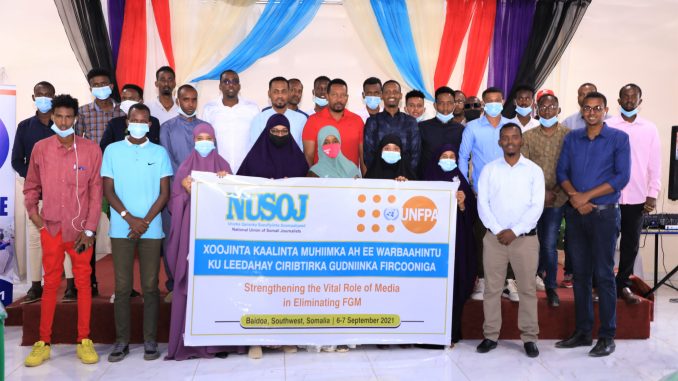
The issue featured prominently during capacity-building workshops organised by the National Union of Somali Journalists (NUSOJ) in Mogadishu and Galkayo from October 25 to 29, where participants examined how digital tools can be misused to harass, intimidate and undermine journalists.
The discussions brought together 69 journalists, including 35 women and 34 men, exceeding the initial target of 60 participants. The workshops were supported by the United Nations Development Programme (UNDP) through the Bilan Project and funded by the European Union (EU).
Participants examined the risks posed by online harassment, cyberbullying, threats and the misuse of digital content, including AI-generated sexualised images. They also discussed how journalists could protect their identities, work and sources while pushing media organisations to take digital abuse more seriously.
The concerns formed part of broader discussions about the safety and treatment of women in the media industry, where journalists also highlighted workplace harassment, discrimination, unequal pay and limited opportunities for professional advancement.
NUSOJ Organising Secretary Nima Hassan Abdi said journalists needed safe working environments and stronger professional protections to serve the public effectively.
“Journalists can serve the public best when they work safely, uphold ethical standards and are treated fairly. These activities sharpened the practical skills and allowed working journalists a safe space to discuss discrimination, digital threats and the barriers facing women in the media. We want these discussions to lead to more respectful newsrooms where women and men can contribute equally and work with dignity and in safety,” Abdi said.
The workshops also examined how ethical and gender-sensitive reporting could improve public trust, particularly in coverage involving women and other groups. Journalists discussed verification, balanced reporting and avoiding inflammatory language, alongside the responsibility of newsrooms to uphold professional standards.
Working conditions emerged as another major concern, with participants raising questions about written employment contracts, delayed salary payments, maternity and sick leave, gender pay differences and occupational safety.
The discussions also addressed the need for breastfeeding breaks and effective mechanisms through which journalists can report harassment and discrimination without fear of retaliation.
The Galkayo workshop, held on October 25 and 26, brought together 35 journalists, including 18 women and 17 men, from Puntland and Galmudug. They travelled from locations including Garowe, Qardho, Galkayo, Adado, Abudwak, Guriel and Dhusamareb.
The Mogadishu session followed on October 28 and 29, attracting 34 journalists, comprising 16 women and 18 men.
In Galkayo, Mudug Regional Governor Abdiweli Jibril Beyle officially opened the workshop, welcoming the initiative and its focus on strengthening journalists’ professional skills.