


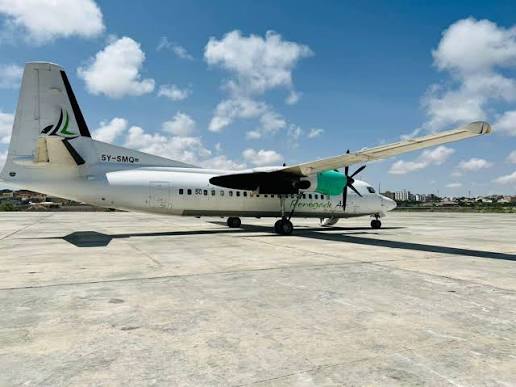
Somalia’s Ugaas Khalif Airport in Beledweyne is set to reopen on Monday, November 23, after deadly clashes between local militia fighters and Djiboutian peacekeeping troops left one fighter dead and six others wounded.
The agreement to resume airport operations was reached on Sunday during a meeting between Somali federal lawmakers and commanders of the African Union Support and Stabilization Mission in Somalia (AUSSOM) at the mission’s Sector Four headquarters in Beledweyne.
The fighters had reportedly received information that the plane was transporting reinforcements from Mogadishu. They moved towards the airport to prevent the soldiers from arriving, triggering a confrontation with Djiboutian troops stationed there.
Gunfire broke out during the standoff, forcing the aircraft to turn back to Mogadishu without landing. Local reports indicated that one militia fighter was killed and six others wounded in the clashes.
Somalia agrees to reopen Beledweyne Airport
The Sunday meeting brought together federal lawmakers Abdirisaaq Abdullahi Ma’alin, Abdinasir Haji Shirwac and Mohamed Abdullahi Burale, alongside AUSSOM Sector Four Deputy Commander Colonel Wundimo Memomssa and Djiboutian contingent commander Colonel Ahmed Adan.
Other African Union military officials also attended the discussions, which sought to ease tensions and restore operations at the airport.
Under the agreement, troops stationed outside the airport will withdraw, clearing the way for the facility to reopen on Monday.
The parties also agreed that aircraft carrying military personnel or additional troops would not be allowed to land at the airport. The restriction is aimed at preventing further confrontations over the arrival of federal government reinforcements.
The meeting also addressed the casualties from Thursday’s clashes, although further discussions were expected to establish how the matter would be handled.
The agreement came after the airport remained closed over the weekend. Airport manager Adan Muhumed Ali said operations had been suspended on Saturday and Sunday to allow repairs to the runway and other areas damaged during the incident.
Djiboutian troops give account of airport clashes
The Djiboutian Embassy in Somalia issued a statement on Friday, November 20, saying its troops had repelled an attack and prevented armed fighters from taking control of the airport.
The embassy maintained that no Djiboutian personnel were killed or wounded during the confrontation.
The statement came a day after the gunfight, which disrupted air transport in Beledweyne and forced the aircraft carrying federal troops to abandon its planned landing.
The Hirshabelle regional administration also directed AUSSOM and Somali security forces to prevent armed individuals from entering the airport, underscoring concerns over the security of the transport facility.
Why tensions escalated in Beledweyne
The confrontation at the airport came amid wider political tensions in Hirshabelle following the re-election of regional President Ali Abdullahi Hussein Gudlawe on October 24 and the election of Abdifatah Hassan Afrah as his deputy.
The outcome was rejected by some traditional elders, politicians and local militia groups, who raised concerns about the election process, representation and the sharing of political power in the regional administration.
Traditional elder Ugaas Yusuf Ugaas Hassan was among those who called for broader consultations over the leadership process.
The political disagreement contributed to an increasingly tense atmosphere in Beledweyne, where some local groups opposed decisions made during the regional leadership selection process.
The airport dispute then brought the political tensions into a direct confrontation involving armed local fighters, Somali federal forces and Djiboutian peacekeepers serving under AUSSOM.