


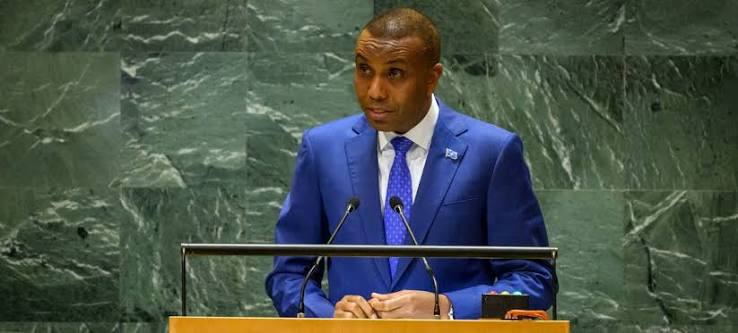
Somalia’s Prime Minister Hamza Abdi Barre has recounted how he narrowly escaped death in the devastating October 14, 2017, bombing in Mogadishu, revealing that he was at a house about 200 steps from the site of the explosion when the blast struck and the building collapsed.
His account emerged on Wednesday, October 14, 2026, as Somalia marked nine years since the Zoobe bombing, one of the deadliest attacks in the country’s history.
The anniversary coincided with the opening of a national conference on preventing and combating extremist ideology, placing the Prime Minister’s personal experience at the centre of renewed calls to confront the threat posed by extremist groups.
Barre said he was among those who survived the explosion, which killed at least 587 people and left hundreds more injured. His recollection offered a glimpse into how close he came to the disaster that devastated families, destroyed property and left a lasting mark on Somalia’s collective memory.
Hamza recounts the moments before the explosion
The Prime Minister explained that he had been in the vicinity of the busy Zoobe junction in the capital when the bombing occurred. He was at a house where he lived, approximately 200 steps from the location of the explosion, when the blast threw him to the ground.
The building subsequently collapsed, but he survived the attack.
“I was among those whom Allah saved. I had passed through that area and went to a house where we lived, about 200 steps from the place where the explosion occurred. When the blast happened, I fell to the ground. Allah spared me from the speeding vehicle, and the house collapsed,” Barre said, recounting his experience at the conference.
The details underline the extraordinary proximity between the Prime Minister and the destruction caused by the bombing. A house that had been part of his everyday life became one of the places caught in the blast’s devastating aftermath, while his survival placed him among those who escaped a catastrophe that claimed hundreds of lives.
The attack occurred on October 14, 2017, when a truck laden with explosives detonated at the busy Zoobe junction in Mogadishu. The explosion caused extensive destruction and overwhelmed emergency responders as residents and rescue workers struggled to reach victims and transport the injured to hospitals.
The death toll was eventually reported at 587, with more than 300 people also injured. The scale of the casualties made the bombing a defining tragedy in Somalia’s recent history and one of the deadliest attacks ever recorded in the country.