


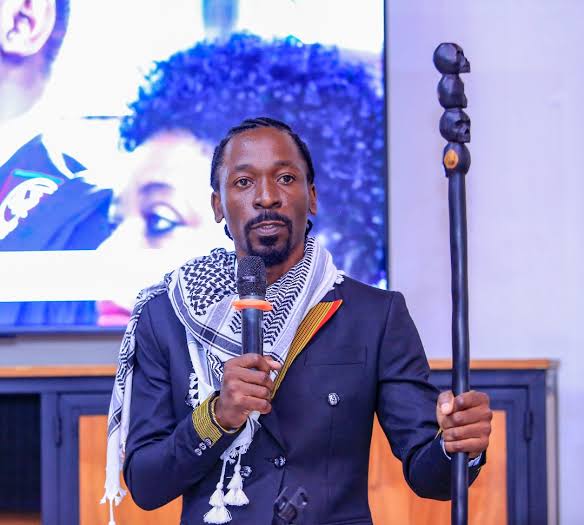
Uganda’s leading association of lawyers has challenged Somali President Hassan Sheikh Mohamud over his handling of the country’s constitutional crisis, demanding that he respect Supreme Court decisions rejecting his continued stay in office and the removal of Chief Justice Baashe Yusuf Ahmed.
The Uganda Law Society issued the strong rebuke in a statement on Tuesday, warning that Somalia risked undermining the democratic institutions that Ugandan soldiers had spent nearly two decades helping to protect.
The lawyers framed their intervention around Uganda’s long military involvement in Somalia, recalling the sacrifices made since March 2007, when Uganda became the first country to deploy troops under the African Union Mission in Somalia (AMISOM).
In a pointed message titled “Uganda Paid in Blood for Somalia’s Peace. Mogadishu Must Not Waste It,” the association argued that the sacrifices of its soldiers were intended to help Somalia establish a stable country governed by constitutional principles, democratic institutions and the rule of law.
“These sacrifices were made not only for the absence of war, but for Somalia to rebuild a country founded on peace, dignity, democratic governance and the rule of law. The sacrifices must not be betrayed by the erosion of the very institutions they helped protect,” the association said.
The statement placed Hassan Sheikh’s recent decisions at the centre of its concerns, particularly his attempt to extend his presidential mandate and his dismissal of Baashe, which the Supreme Court subsequently overturned.
The controversy over the presidential term followed constitutional amendments adopted in March 2026, which extended the terms of the president and members of parliament from four years to five.
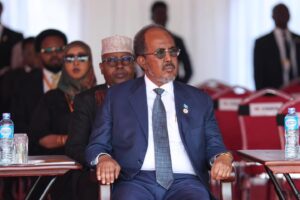
However, in a ruling delivered on November 5, Somalia’s Supreme Court determined that the changes could not apply retrospectively to officials who were already serving when the amendments were adopted.
The court consequently ruled that Hassan Sheikh’s four-year presidential mandate had expired on May 15, 2026, while the terms of both houses of the Federal Parliament had ended on April 14.
It also directed political stakeholders to agree on an electoral framework within 30 days and conduct elections within 90 days, placing the country under pressure to resolve its political disagreements through a constitutional process.
The Uganda Law Society’s intervention came as the dispute over the judiciary added another layer to the country’s political uncertainty.
On November 4, Hassan Sheikh dismissed Baashe and appointed former Chief Justice Ibrahim Idle Suleiman to replace him. The Supreme Court later declared the dismissal unconstitutional, null and void, finding that the president had no authority to remove the chief justice without following the procedures established under the Constitution.
Despite that decision, the president proceeded with Suleiman’s swearing-in on November 7, creating a direct confrontation between the presidency and the country’s highest judicial institution.
The Ugandan lawyers maintained that the authority of the courts and the independence of the judiciary must be protected, warning against decisions that weaken constitutional safeguards.
Their statement also brought Somalia’s membership in the East African Community into the dispute, arguing that the country has regional obligations that extend beyond its domestic political arrangements.
The association cited Articles 6(d) and 7(2) of the EAC Treaty, which require member states to uphold democratic principles, accountability, good governance, human rights and the rule of law.
It called on the East African Community, the African Union and the wider international diplomatic community to engage Somalia’s leadership and encourage compliance with constitutional decisions and regional obligations.
The intervention also attracted a response from Baashe, who welcomed the lawyers’ position in a Facebook post.
The former chief justice thanked the Uganda Law Society for standing with judicial independence at what he described as a critical moment for Somalia.