


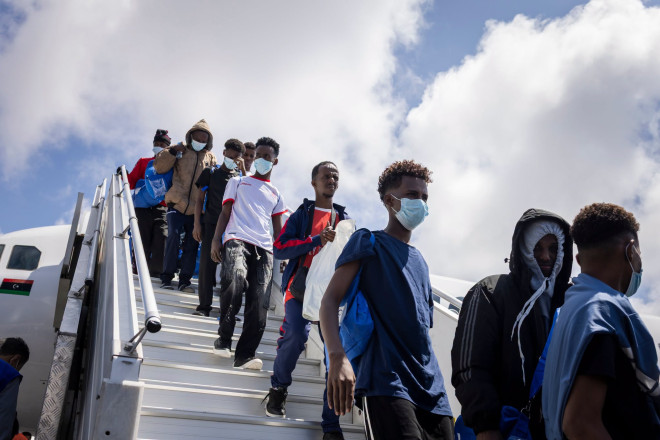
Somalia has received 170 citizens who had been stranded in Libya after enduring dangerous migration journeys, harsh detention conditions and exploitation by human traffickers, bringing them back home through a European Union-supported voluntary return programme.
The returnees arrived in Somalia on Tuesday, November 10, in an operation coordinated by the Federal Government and supported by the European Union in Somalia, giving the migrants an opportunity to reunite with their families after months of uncertainty in the North African country.
The group included children and young adults who had faced difficult circumstances while travelling through irregular migration routes and attempting to find opportunities abroad.
Somalia’s Interior, Federal Affairs and Reconciliation Minister, Ali Yusuf Ali Hoosh, said the returnees had experienced serious humanitarian challenges in Libya, including exploitation by human trafficking networks and harsh conditions in detention facilities.
Some had also developed health problems following their experiences, raising concerns about the physical and emotional toll of their time in the country.
The minister said the government and its international partners had prepared support programmes to help the returnees recover from their ordeal and rebuild their lives after coming home.
“The government and its partners had prepared assistance programs to help the returning migrants rebuild their lives in Somalia,” Hoosh said.
The planned assistance includes medical care, employment opportunities and reintegration services intended to help the returnees regain their footing and become economically self-sufficient.
The European Union in Somalia described the operation as a safe, voluntary and dignified return, emphasising the need to protect vulnerable migrants from trafficking, exploitation and abuse.
For the 170 returnees, the journey home represents an opportunity to leave behind the uncertainty they had faced in Libya and reconnect with relatives who had been separated from them.
However, the government also used the return operation to issue a warning to young Somalis considering dangerous migration routes in search of better opportunities abroad.
Hoosh urged young people to avoid irregular journeys, cautioning that routes through deserts and across the Mediterranean Sea expose migrants to human trafficking, exploitation, detention and life-threatening dangers.
He also encouraged those who had returned to remain hopeful and take advantage of opportunities available in Somalia rather than lose hope after their difficult experiences abroad.
The operation involved several government institutions, including the Immigration and Citizenship Agency, the Ministry of Foreign Affairs and International Cooperation and the Somali Police Force, working alongside international partners.
Libya has remained a major transit point for migrants hoping to reach Europe through the Mediterranean, with thousands travelling through the country in search of better economic prospects or while fleeing insecurity in their homelands.