


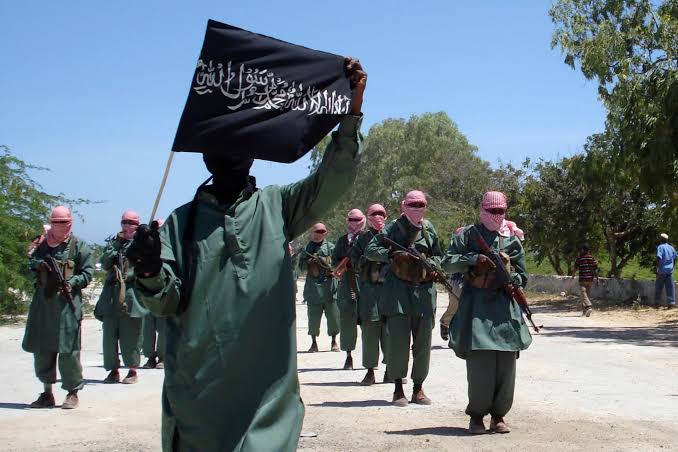
For more than three decades, Somalia has struggled to establish lasting peace, with successive governments relying on foreign military assistance to confront armed groups and protect key institutions. Yet, despite years of international military involvement, Al-Shabaab remains a threat, raising an uncomfortable question about how long the country can depend on foreign soldiers to secure its future.
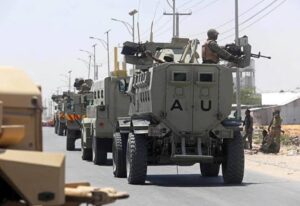
The question has become increasingly urgent as Somalia prepares to assume greater responsibility for its own security, with African Union peacekeepers expected to complete their mission in 2029. The planned departure presents the country with an opportunity to demonstrate that its national forces can defend its territory, protect civilians and sustain military operations without depending on foreign troops.
But replacing foreign soldiers with Somali soldiers is only one part of the challenge. The bigger question is whether Somalia has built the institutions, military capacity and political unity needed to sustain security after international forces leave.
There is a fundamental distinction that Somalia must confront: ending a foreign military mission is not the same as ending dependence on foreign military support.
The country could have thousands of additional soldiers on its payroll and still struggle to defend itself if those soldiers lack reliable supplies, intelligence, equipment, transport, medical support and consistent leadership.
That distinction is particularly important because the United Nations has continued providing logistical assistance to both AUSSOM and Somali security personnel. Its support to Somali forces includes food, water, fuel, transport, medical evacuation, communications equipment and training. The assistance covers up to 20,900 Somali security personnel participating in joint or coordinated operations with the African Union mission.
In other words, Somalia is not simply preparing to replace foreign soldiers. It must also prepare to replace some of the systems that help keep its own soldiers operational.
More soldiers will not automatically mean more security
Somalia’s announcement that it intends to recruit more than 20,000 soldiers is significant, particularly as the country prepares for a future in which its national army must shoulder greater responsibility.
However, the number of recruits should not become the main measure of military progress.
A country can recruit thousands of soldiers and still struggle to protect its population if its military cannot move troops quickly, supply them with ammunition, maintain equipment or provide reliable intelligence during operations.
The challenge is not merely getting young Somalis into military uniforms. It is building a professional force that can remain operational, disciplined and effective even when international assistance is reduced.
Recent developments illustrate the scale of this problem. A United Nations report on Somalia’s security and support operations noted that shortages in the trust fund supporting Somali forces temporarily interrupted fuel and ration deliveries before additional contributions arrived in August 2026.
This is a serious issue for a country seeking to become less dependent on foreign military assistance. If the operations of its national forces can be disrupted by shortages in basic supplies, expanding the army without addressing the underlying funding and logistical problems could create a larger force without necessarily creating a stronger one.
Somalia must therefore invest in the systems that sustain its military, not simply announce how many soldiers it intends to recruit.
Al-Shabaab remains a threat despite years of military operations
The other uncomfortable question is why Somalia continues to face such a persistent insurgency despite years of military campaigns supported by foreign troops.
Al-Shabaab has survived successive military offensives and maintained the ability to attack government targets, security installations and civilians.
A United Nations report published in November 2026 continued to identify the group as Somalia’s principal security threat, with its activities concentrated across south and central Somalia.
This should prompt a broader examination of what Somalia considers military success.
Killing hundreds of militants in an operation is important, but the real test is whether government forces can hold the areas they recover, protect the people living there and prevent insurgents from returning.
A military offensive that pushes militants out of a town but leaves residents without functioning security structures, reliable administration or essential services risks producing only temporary gains.
Somalia needs to move beyond measuring progress through the number of fighters killed or territories recovered. It must also demonstrate that communities can live without fearing that armed groups will return once government troops leave.
The fight against Al-Shabaab cannot be won through military operations alone. It also requires functioning local administrations, accessible justice, economic opportunities and public confidence in government institutions.
Foreign troops cannot be expected to stay forever
Somalia’s relationship with international military partners has been central to its security arrangements, but the country cannot postpone building its own capacity indefinitely.
The African Union Support and Stabilisation Mission in Somalia, known as AUSSOM, replaced ATMIS in January 2025. Its strategic plan envisages a phased transfer of security responsibilities to Somali forces, with the final mission exit scheduled for December 2029. However, the transition is tied to improvements in the capabilities of Somali forces and assessments of the security situation.
The distinction matters because the departure date should not be treated as an instruction to remove foreign soldiers regardless of what is happening on the ground.
An orderly handover requires Somali forces to demonstrate that they can secure military bases, protect important transport routes, respond to attacks and prevent militants from exploiting gaps left by departing troops.
If these conditions are not met, a premature withdrawal could create opportunities for Al-Shabaab to expand its operations and threaten communities that have already endured years of insecurity.
There is also a responsibility on Somalia’s international partners to ensure that the transition does not leave critical military operations without the resources needed to continue.
The country needs to assume responsibility for its security, but that process must be based on measurable improvements rather than political declarations.