


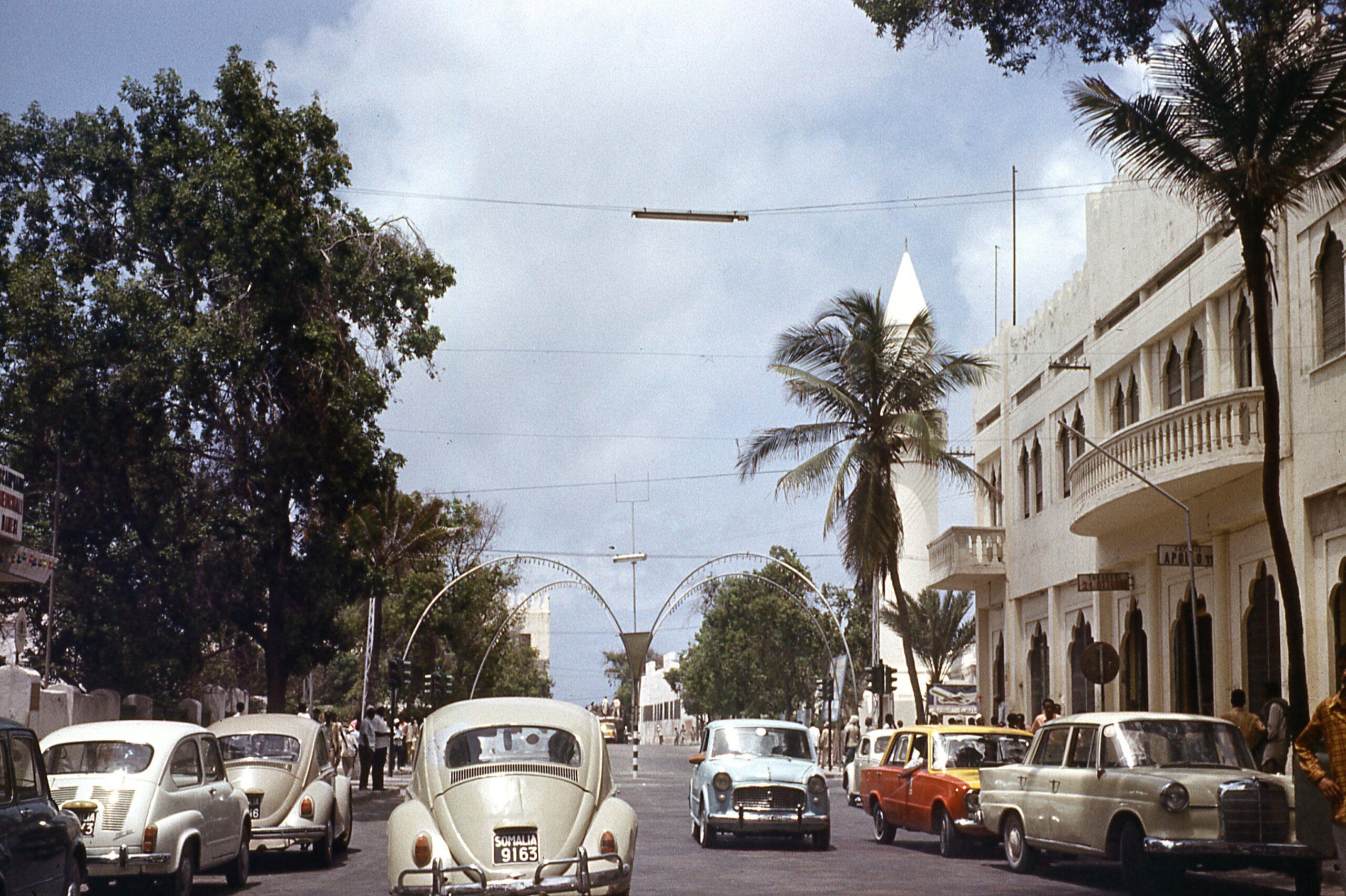
Before Somalia’s capital became internationally associated with civil war, destruction and decades of political instability, Mogadishu had a different story to tell. Known locally as Xamar, the coastal city was a historic trading centre whose streets brought together Somali culture, international commerce, public institutions, cinemas and a distinctive blend of architectural influences.
For Somalis who remember the decades before the state collapsed in 1991, the old capital represents more than buildings that were later damaged or lost. It recalls a period when families could gather at cinemas, the arts occupied a prominent place in public life, government institutions shaped the city skyline and the Indian Ocean formed part of the capital’s everyday identity.
The city was not free from hardship, however. Behind its cultural life and urban development were political repression, economic difficulties and growing armed opposition to the government of President Mohamed Siad Barre. Those tensions intensified during the 1980s before his government was driven from Mogadishu in January 1991, ushering in a devastating struggle for control of the capital.
A coastal city shaped by centuries of trade
Mogadishu’s story stretches far beyond the decades immediately preceding the civil war. Its position along the Indian Ocean helped make it an important centre of commerce, connecting communities along the East African coast with merchants travelling from Arabia, Persia and other parts of the Indian Ocean world.
For generations, the city’s relationship with the sea shaped its economy and identity. Traders, sailors and visitors contributed to a cultural landscape influenced by Somali traditions and contact with the wider world. Islam also became deeply rooted in the city’s history, while its older neighbourhoods developed distinctive architectural and social traditions.
During the colonial period, Mogadishu underwent substantial physical changes. Italian administration transformed parts of the city into a colonial capital, introducing European-style buildings and reorganising urban space. These changes came at a cost: research on the city’s architectural heritage documents how colonial development displaced residents and altered existing neighbourhoods.
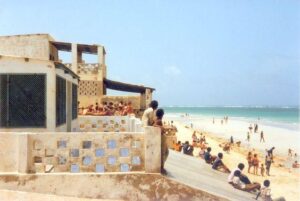
After independence, Somalia’s authorities repurposed some colonial-era buildings for national institutions, while streets formerly named after Italian figures were renamed in honour of Somalis. The result was a city whose architecture reflected several layers of history rather than a single cultural influence.
That mixture of influences helped shape Mogadishu’s reputation as a cosmopolitan coastal capital. Its significance, however, was never limited to the appearance of its streets or buildings. It was also a place where commerce, education, entertainment and public life converged.
The cinemas that made evenings memorable
One of the most evocative aspects of Mogadishu’s pre-war life was its cinema culture. Long before streaming platforms and smartphones changed how people watched films, movie theatres offered residents a shared form of entertainment that brought young people, couples and families together.
A 2019 report by Hiiraan Online, which explored Somalia’s enduring love affair with Bollywood, recalled a period when Mogadishu had approximately 10 cinemas, a number that reportedly later rose to 18. Indian films were especially popular, even when audiences had to follow the stories without subtitles or dubbing.
The report identified cinemas including Cinema Super, Cinema Afrika, Cinema Somaliya, Cinema Nasar and Cinema Hadramout among the venues that formed part of the capital’s entertainment scene.
Going to the cinema was not simply about watching a film. It could become an event around which people organised their evenings. According to recollections documented by Hiiraan Online, vehicles would travel around neighbourhoods announcing new releases and the actors appearing in them, building anticipation among prospective audiences.
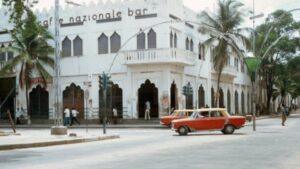
Open-air screenings added another dimension to the experience. For residents who remember them, watching a film beneath the night sky, with the coastal breeze providing relief from the heat, became part of the city’s social memory.
The popularity of Indian cinema also illustrates how cultural influences travelled across borders. Somali audiences developed their own attachments to films and performers from abroad, incorporating international entertainment into a distinctly local social environment.
This is one of the reasons photographs of the old capital continue to hold emotional significance. They recall a time when a night out could revolve around a cinema, an evening with friends or a familiar gathering place rather than the concerns about safety that would later dominate life in many parts of the city.
A capital with a thriving artistic identity
Cinema was only one part of Mogadishu’s cultural life. The capital also had a place in the development of Somali theatre, music, poetry and filmmaking.
The Somali National Theatre became an important symbol of the country’s artistic ambitions. Its history is associated with the post-independence period, when cultural institutions provided spaces for Somali performers and writers to present their work to domestic audiences.
Somali oral traditions, particularly poetry, had long served as a means of preserving history, expressing political views and exploring social relationships. In the capital, these traditions existed alongside more formal artistic institutions and a growing modern entertainment culture.
The development of Somali cinema also reflected this creative energy. Following independence in 1960, locally owned film production and distribution businesses and projection theatres began to expand. Somali filmmakers contributed to a national film culture that explored the relationship between rural and urban life, social change and the country’s evolving identity.
For a country whose cultural traditions have historically relied heavily on oral expression, the growth of cinema and theatre offered additional ways to tell Somali stories. Performances and films could bring language, humour, music and social commentary before audiences in new forms.
The capital’s artistic life was not isolated from politics. Cultural expression developed under a government that increasingly restricted political opposition, and public institutions operated within the realities of a one-party state. Nevertheless, the city’s artistic history remains an important part of its identity, independent of the political system under which individual works were produced.
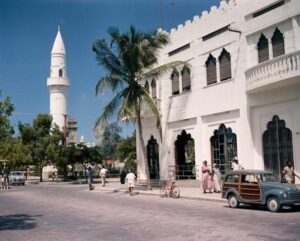
The later destruction and deterioration of cultural buildings therefore represented more than the loss of physical structures. It also threatened the spaces through which successive generations had encountered Somali art and public performance.
The architecture that told the story of old Mogadishu
For anyone examining photographs of Mogadishu before the civil war, the architecture offers a visual record of the city’s transformation.
Historic quarters contained buildings associated with the city’s long-standing coastal connections, while other parts of the capital reflected Italian colonial planning. Arched windows, ornamental façades and European-influenced public buildings stood alongside structures shaped by local and wider regional traditions.
The city’s colonial-era buildings acquired new meanings after independence. Research published in the journal Interventions explains that some sites and buildings were appropriated and nationalised, while streets were renamed to reflect Somali national identity. Colonial structures consequently became part of the post-independence capital, even as their original political associations were challenged or forgotten.
The history is important because it complicates the idea that the city’s beauty belonged to one particular period. Mogadishu’s appearance was shaped by centuries of exchange, local construction, colonial intervention and post-independence development.
Its architectural heritage also carries a difficult history. The introduction of colonial urban planning involved the demolition of existing structures and the displacement of Somali residents in some areas. A serious account of the old city must acknowledge these experiences rather than presenting colonial-era buildings as evidence of an uncomplicated golden age.
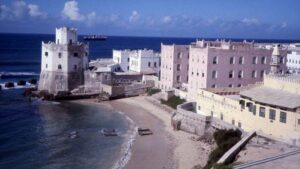
The civil war inflicted further damage on this already layered landscape. Historic buildings, public facilities and commercial properties were caught in fighting, while neglect and subsequent insecurity placed additional pressure on the city’s built heritage.
A 2013 Al Jazeera feature on Mogadishu’s reconstruction described workers repairing an Italian-era hotel whose walls had been marked by bullets. The report also highlighted the city’s mixture of Arabic, Italian and Portuguese architectural influences, evidence of its long history of contact with different cultures.
The buildings that survived, alongside archival photographs of those that did not, remain important records of how Mogadishu developed and how conflict changed it.