


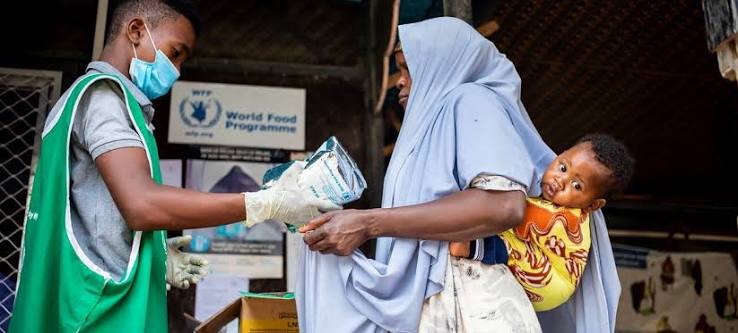
Somalia has lost 233 nutrition centres over the past 18 months, with hundreds of health facilities also cutting services as the country prepares for another year of rising humanitarian needs, the United Nations has warned.
The closures come as the number of people requiring humanitarian assistance in Somalia is projected to climb from 4.8 million in 2026 to approximately 5.7 million in 2027, raising concerns about how vulnerable families will access food, healthcare and other life-saving support.
The warning was delivered by the UN Humanitarian Coordinator for Somalia, George Conway, at a humanitarian forum in Dhusamareb, the capital of Galmudug State, on Thursday, November 26.
Conway attributed the worsening situation to a combination of climate shocks, armed conflict, displacement, disease outbreaks and food insecurity, with reductions in humanitarian funding making it increasingly difficult for aid agencies to reach affected communities.
The loss of 233 nutrition centres is particularly concerning because these facilities provide services to people facing malnutrition, including vulnerable children and mothers. Their closure leaves fewer locations where families can seek nutritional support at a time when millions more people are expected to require assistance.
Beyond the nutrition centres, Conway said services had also been reduced at 380 health facilities and mobile medical teams, further limiting access to healthcare in communities already struggling with humanitarian emergencies.
UN warns of worsening crisis in 2027
The UN official said the outlook for 2027 remained worrying, with several parts of Somalia expected to experience multiple emergencies simultaneously.
“As we look forward to 2027, however, the outlook continues to be worrying – largely as a result of the breadth of the humanitarian crisis and the reduction in funding,” Conway said.
He revealed that 67 of Somalia’s 90 districts were expected to experience at least one type of shock next year. Of these, 27 districts were projected to face four different shocks at the same time, placing them among the areas facing the highest levels of humanitarian severity.
The challenges include droughts, floods, conflict, displacement and disease outbreaks, which can compound one another and leave communities with fewer ways to recover.
Conway also disclosed that Somalia’s humanitarian response plan for 2026 had received only 36 per cent of the funding required, making it one of the least-funded humanitarian crises in the region.
The funding shortfall has already affected the number of people aid agencies can reach.
Between January and October, humanitarian organisations provided life-saving assistance to approximately 920,000 people against a target of 2.4 million. This meant more than 1.5 million of the people targeted for support had not been reached during that period.
Flooding adds to pressure on vulnerable communities
The humanitarian situation has also been complicated by flooding associated with the El Niño weather pattern, which Conway said had affected more than 172,000 people across 20 districts.
Although the worst of the predicted rainfall had not materialised, he warned that the possibility of further rain and flooding remained.
Kamal Gutale, the Permanent Secretary in the Office of the Prime Minister, said Somalia had so far experienced milder conditions than authorities had anticipated.
“We have been spared more than we prepared,” Gutale said, while cautioning that the danger had not passed.
He also raised concerns about the financing of the government’s El Niño response plan, which was valued at $578 million. According to Gutale, less than one per cent of the required funding had been confirmed when the plan was approved.
He called for early-warning systems to be connected to funding commitments made in advance, allowing assistance to reach vulnerable families before emergencies escalate rather than waiting for fresh appeals.
UN urges donors to increase funding
Conway called on international donors to increase humanitarian funding immediately, urging aid agencies and the Somali government to direct the limited resources available towards communities facing the greatest needs.
He also called for greater investment in resilience, climate adaptation and long-term development to help Somalia escape the recurring cycle of droughts, floods and displacement.
The country has experienced repeated climate emergencies in recent years, including the devastating drought of 2022 and 2023, which pushed parts of Somalia to the brink of famine.
The latest projections suggest that millions of people could continue depending on humanitarian assistance in 2027, even as the organisations expected to provide that support grapple with severe financial constraints.