


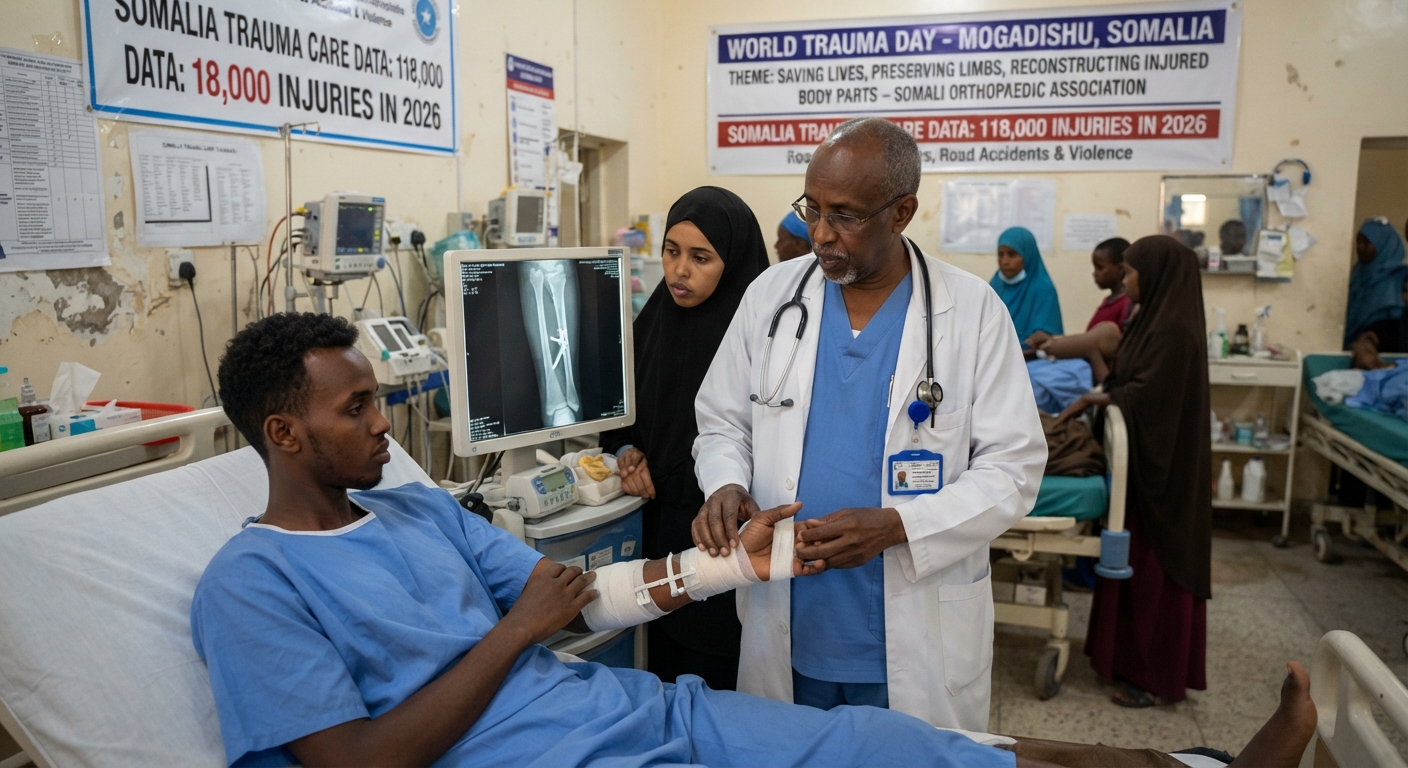
Somalia recorded 118,000 injuries in 2026, with road accidents, gunshot wounds, knife attacks and other forms of violence continuing to place pressure on the country’s healthcare services, figures presented by the Ministry of Health have shown.
The figures emerged as medical professionals gathered in Mogadishu on Saturday, October 17, to mark World Trauma Day, drawing attention to the demands facing emergency departments and the need to improve treatment for people suffering serious injuries.
The scale of the reported cases has placed trauma care at the centre of discussions among Somali medical professionals, particularly the need to strengthen emergency response systems and improve hospitals’ capacity to handle patients whose injuries require urgent surgical intervention.
The gathering was organised by the Somali Orthopaedic Association under the theme of advancing complex trauma care through strategies aimed at saving lives, preserving limbs and reconstructing injured body parts.
While the Ministry of Health said the number of accidents had declined compared with previous years, injuries from road crashes and violent incidents remained a significant challenge for healthcare providers.
Trauma Care Demands
The Ministry of Health identified road accidents, gunshot wounds, knife attacks and other forms of violence among the sources of injuries affecting the country.
Such cases can require different levels of medical intervention, ranging from emergency stabilisation to surgery and extended rehabilitation. Seve re injuries may also require specialised orthopaedic treatment to repair damaged bones, preserve limbs and restore mobility.
The 118,000 figure highlights the volume of injuries reported during the year, although the information released at the event did not provide a breakdown by cause, severity, location or the number of patients who required hospital admission.
It also did not specify how many of the cases resulted in permanent disability or death.
Nevertheless, health officials used the World Trauma Day commemoration to emphasise the importance of improving the country’s capacity to respond to serious injuries and provide appropriate treatment.
The challenge extends beyond the immediate response to an accident or violent incident. Patients with complex injuries may require coordinated care involving emergency personnel, surgeons, anaesthetists and specialists responsible for rehabilitation.
Improving these services can help medical teams respond more effectively to emergencies and reduce the risk of preventable complications.
Better Treatment for Serious Injuries
The Somali Orthopaedic Association used the gathering to bring medical professionals together to exchange knowledge, share practical experience and discuss ways to improve the treatment of trauma patients.
Association chairman Yaasiin Barqad said the meeting was intended to encourage collaboration among doctors and strengthen their approaches to managing injuries.
The discussions focused on improving the quality of care available to patients, particularly those with complex injuries that require specialised treatment.
The association’s theme placed particular emphasis on three objectives: saving lives, preserving injured limbs and reconstructing damaged body parts.
These priorities reflect the different stages of trauma treatment, from stabilising patients during emergencies to undertaking surgery and helping survivors regain physical function.