


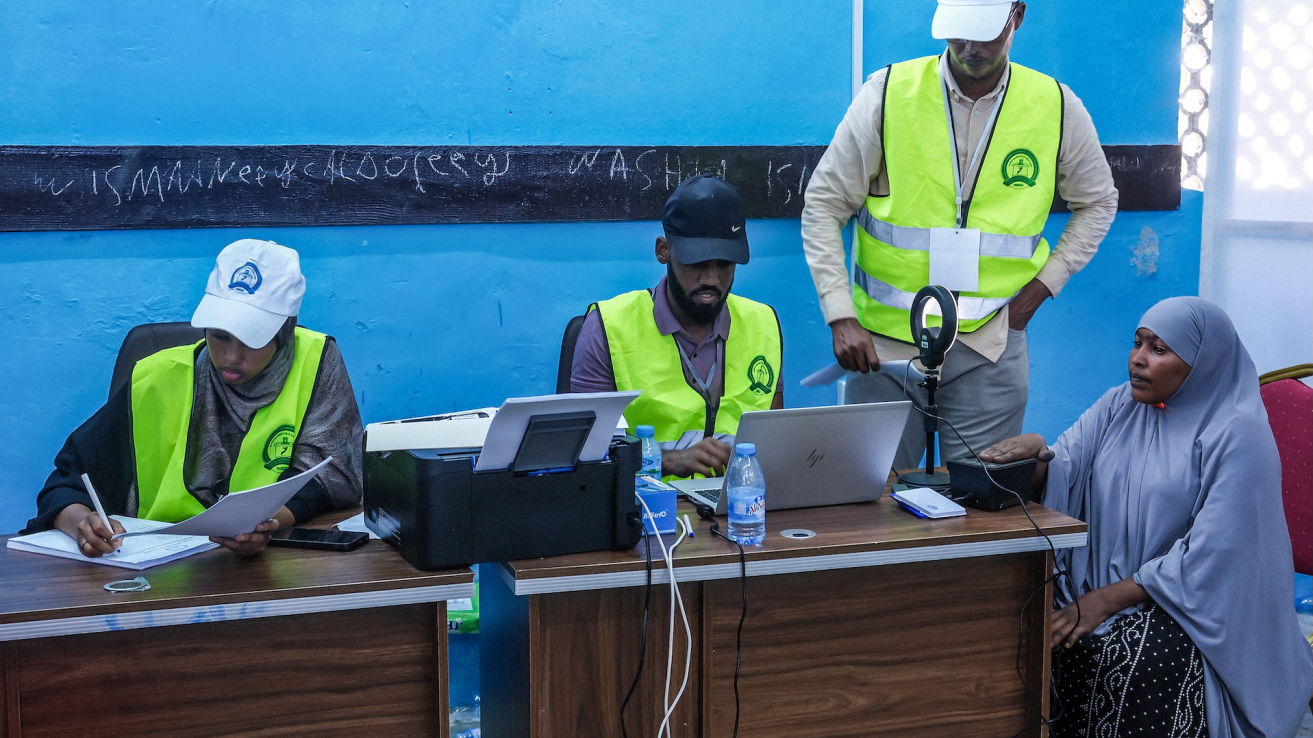
Somalia’s National Independent Electoral and Boundaries Commission has announced May 15, 2027, as the date for the country’s next presidential election, setting out a detailed timetable for the polls as a deepening political dispute threatens to complicate preparations.
The commission announced on Thursday, October 15, that elections for both houses of the Federal Parliament would take place on April 15, 2027, exactly one month before the presidential vote. Both elections are scheduled to follow a one-person, one-vote system, under which eligible citizens directly cast ballots rather than relying on the traditional indirect process through which clan elders and electoral delegates select lawmakers.
The announcement gives political organisations, prospective candidates and voters a defined schedule to prepare for the elections. However, it comes amid an unresolved disagreement between the federal government and opposition groups over the electoral framework, the constitutional changes underpinning the process and the lack of a political agreement acceptable to all major stakeholders.
The commission said the timetable had been established under the provisions of Somalia’s Constitution and national electoral legislation, asserting its authority to organise the elections and determine the dates.
Key dates released by the electoral commission
The commission has outlined several milestones leading up to the 2027 elections, beginning with the reopening of registration for political organisations and voters next month.
The schedule is intended to guide the preparation of candidate lists, voter records and campaigns before Somalis head to the polls.
The main dates announced are:
- November 1–22, 2026: Registration of political organisations and voters reopens.
- November 22, 2026: Deadline for submitting parliamentary candidate lists.
- January 21, 2027: Scheduled publication of the provisional voter list.
- February 27, 2027: Parliamentary election campaigns are scheduled to begin.
- March 15, 2027: Scheduled publication of the final voter list.
- April 15, 2027: Elections for both houses of the Federal Parliament.
- May 15, 2027: Presidential election.
Why the election dates are politically significant
The announcement comes after months of disagreement over Somalia’s electoral future, with the federal government insisting that the country should proceed with direct elections while opposition leaders have challenged the process being advanced by the administration.
President Hassan Sheikh Mohamud has maintained that Somalia should move towards a one-person, one-vote system, arguing that citizens should directly elect their representatives. The government has presented the model as a major step away from the indirect arrangements used in previous federal elections.
Under the traditional indirect system, parliamentary seats are filled through a process involving delegates selected through clan-based arrangements, after which lawmakers elect the president. A direct election model would instead give eligible voters a more immediate role in choosing their representatives, subject to the electoral arrangements adopted for the polls.
The disagreement, however, is not simply about whether Somalis should eventually vote directly. It also concerns the process through which the new system is being implemented, the legal and constitutional changes involved, and whether the government has secured sufficient agreement from opposition leaders and other political stakeholders.
Opposition groups have objected to the government’s electoral process, while several rounds of talks have failed to produce a comprehensive agreement. Former president Mohamed Abdullahi Farmaajo has also warned that the commission’s timetable could lead to competing electoral processes and renewed political confrontation.
Opposition groups have also presented an electoral proposal
Despite their objections to the government-led process, opposition groups have continued to engage with international partners over alternative arrangements for the elections.
The Somali Future Council, Nabad iyo Nolol and the National Unity Council have submitted an electoral proposal to international partners, including the United Kingdom, the United States, the European Union and the United Nations.
The groups have described their proposed framework as supporting a one-person, one-vote system and have rejected a return to indirect elections. Their position highlights the distinction between support for direct voting as a principle and agreement over how, when and under what political arrangements it should be implemented.
The central challenge remains the absence of a negotiated settlement between the government and its opponents over the electoral process. Without such an agreement, the published timetable could become another point of contention as the country approaches the scheduled polls.
The government, meanwhile, has continued to insist that direct elections should proceed rather than returning to the previous indirect model.