


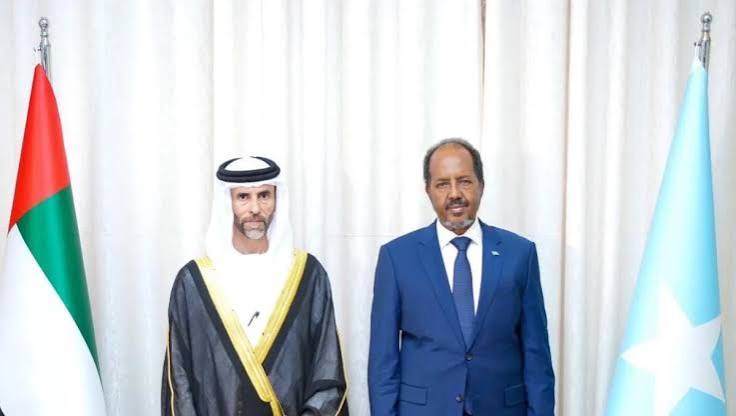
Somalia has ordered the United Arab Emirates’ ambassador to leave the country within 72 hours and recalled its own envoy from Abu Dhabi, marking a dramatic escalation in a diplomatic confrontation that has increasingly centred on sovereignty, military cooperation and control of strategic ports.
The decision, announced on Thursday after a Cabinet meeting in Mogadishu, signals a shift from diplomatic protests to direct action against the UAE’s diplomatic representation in Somalia.
Prime Minister Hamza Abdi Barre chaired the weekly meeting, during which ministers considered a report from the Ministry of Foreign Affairs detailing what the government described as threats to the country’s independence, national security and territorial integrity.
Information Minister Abdulfatah Qasim Mohamud announced that the Cabinet had instructed the Foreign Ministry to formally notify the Emirati ambassador of the decision and ensure he leaves Somalia within the stipulated period.
At the same time, Somalia’s ambassador to the UAE was recalled to Mogadishu for consultations, effectively withdrawing the country’s top diplomatic representative from Abu Dhabi while the dispute continues.
The government also directed its Foreign Ministry to bring the matter to the attention of the international community, accusing the UAE of continued interference in Somalia’s internal affairs.
Mogadishu said it would pursue lawful measures against actions it considers violations of its sovereignty and territorial integrity. The information minister further warned individuals and groups against participating in activities the government believes are intended to undermine national unity and independence.
Breaking point
The confrontation intensified on Tuesday when Hassan Sheikh delivered a televised address accusing the UAE of providing financial, political and security support to armed groups and regional administrations opposed to the Federal Government.
The president also alleged that Abu Dhabi had established military facilities and supported security arrangements outside the authority of Somalia’s national institutions.
A major point of disagreement involves UAE-linked arrangements with Somaliland, Puntland and Jubaland, particularly those involving the strategic ports of Berbera, Bosaso and Kismayo.
Hassan Sheikh argued that agreements involving foreign governments and strategic national assets should be negotiated through the Federal Government rather than individual regional administrations.
His position is that allowing foreign powers to enter security and economic arrangements with regional authorities without Mogadishu’s approval weakens the country’s sovereignty and undermines efforts to establish a unified national security structure.
The UAE, however, has rejected accusations of interference, defending its longstanding involvement in Somalia and its relationships across the country.
UAE adviser fires back at Hassan Sheikh
The diplomatic fallout became more pronounced on Wednesday after Anwar Gargash, diplomatic adviser to UAE President Sheikh Mohamed bin Zayed Al Nahyan, criticised the Somali president’s remarks.
Gargash accused Hassan Sheikh of allowing personal political considerations to influence relations between the two countries.
He also defended the UAE’s support for Somalia and warned against allowing internal political disagreements to pull the country into wider regional rivalries.
The exchange exposed the growing disagreement between the two governments, with Mogadishu demanding that foreign engagement take place through federal institutions while Abu Dhabi maintains its position on its relationships and cooperation in Somalia.
Somalia’s Foreign Ministry subsequently issued a statement expressing grave concern over what it described as continued Emirati interference.
The ministry insisted that the Federal Government was the sole authority responsible for the country’s foreign relations and rejected foreign security agreements and other arrangements concluded without its authorisation.
It called on the UAE to conduct its diplomatic, economic and security engagement with Somalia through federal institutions and in accordance with international law.
Thursday’s decision also follows an earlier move by Somalia’s Cabinet in January to annul agreements with the UAE covering security, defence and economic cooperation, including arrangements involving regional ports.
Mogadishu said the cancellation was necessary to protect national sovereignty and territorial integrity.
Despite the decision, the UAE has maintained longstanding economic and security ties with different Somali regional administrations, creating a persistent disagreement over whether such partnerships should require approval from the Federal Government.