


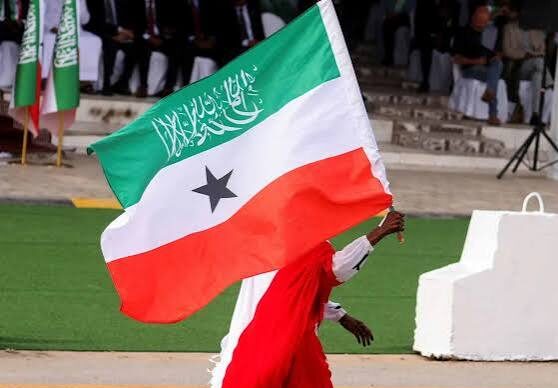
Somaliland has challenged the Somali Federal Government’s attempts to assert authority over its international dealings, insisting that Mogadishu cannot dictate who it engages with diplomatically or which agreements it enters into with foreign countries.
The latest confrontation underscores the longstanding political dispute between the two administrations over Somaliland’s status, sovereignty and control of foreign relations, with Hargeisa maintaining that it operates independently of Somalia’s central government.
In a statement issued on Thursday, Somaliland’s Ministry of Foreign Affairs accused Mogadishu of attempting to interfere with its diplomatic engagements, economic partnerships and strategic agreements, arguing that such matters fall exclusively within its own jurisdiction.
The ministry maintained that Somaliland’s international engagements did not require the Federal Government’s approval, rejecting what it described as attempts to restrict its relations with foreign governments and international partners.
The statement did not identify the specific actions by Mogadishu that prompted the latest response, but the dispute reflects continuing disagreements over Somalia’s territorial integrity and Somaliland’s pursuit of international recognition.
Somaliland based its position on its historical claim to sovereignty, arguing that it was an independent territory following the end of British rule on June 26, 1960, before entering into a union with the former Italian-administered Somalia.
The ministry further argued that the union formed in 1960 had never been formalised through a legally binding agreement ratified by both sides, a position it uses to support its claim that Somaliland restored its sovereignty when it declared separation from Somalia on May 18, 1991.
According to Hargeisa, the historical circumstances surrounding the union undermine Mogadishu’s claims that it has authority over Somaliland’s foreign relations and international agreements.
The administration insisted that Somalia’s position could not invalidate agreements Somaliland had entered into with international partners or prevent it from pursuing new economic and diplomatic relationships.
The dispute over foreign relations has become one of the most contentious issues between the two sides, particularly as Somaliland continues to seek international recognition while Somalia’s Federal Government maintains that the territory remains part of the country’s sovereign borders.
Mogadishu has consistently opposed moves by Somaliland to establish independent diplomatic relations or enter into international agreements that could strengthen its claim to statehood, arguing that foreign affairs remain the responsibility of the Federal Government.
Somaliland, however, has continued to operate its own government institutions, security forces and administrative structures while pursuing international engagement, despite lacking widespread international recognition as an independent country.
The latest statement from Hargeisa signals that Somaliland is unwilling to accept Mogadishu’s authority over its external relations, setting the stage for further political confrontation over the limits of Somalia’s federal authority and Somaliland’s ambitions for international recognition.
Somaliland declared separation from Somalia in 1991 following the collapse of the central government under former President Siad Barre. More than three decades later, the dispute over its status remains unresolved, with Mogadishu continuing to defend Somalia’s territorial integrity while Hargeisa insists it is a sovereign state.