


The United Nations has condemned Somaliland’s execution of nine men convicted of murder, raising concerns over the fairness of their trials and demanding that authorities halt any remaining death sentences.
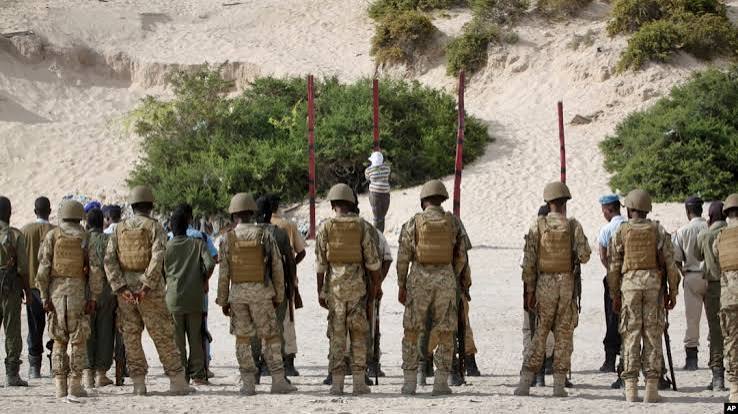
The executions were carried out on November 11, 2026, in the Mandera area of Somaliland’s Sahil region, after President Abdirahman Mohamed Abdullahi Irro authorised the implementation of the death sentences.
In a statement issued on Wednesday, November 18, UN Human Rights spokesperson Seif Magango expressed concern over the executions, saying the men had been tried in military courts that failed to meet international standards of fairness and due process.
The UN said the circumstances surrounding the trials raised serious questions about whether the accused received adequate legal protections before their sentences were carried out.
“We are deeply disturbed by the execution of nine men in Hargeisa on 11 November following murder trials conducted in military court that, in addition, fell short of international fair trial and due process standards,” Magango said.
The nine men were reportedly executed by firing squad after being convicted in separate murder cases. Most of them were said to have previously served in different branches of Somaliland’s security forces.
Somaliland authorities have not publicly disclosed the identities of the executed men or provided detailed information about the individual cases that led to their convictions.
It also remains unclear whether all available appeals had been exhausted before the sentences were carried out.
The executions were reportedly conducted under qisas, an Islamic legal principle that allows retributive punishment in certain homicide cases.
However, the UN Human Rights Office called on Somaliland authorities to stop any pending executions, warning against further use of the death penalty.
“We call for any pending executions to be halted. More generally, we urge establishment of a moratorium on executions across Somalia, with a view to eventual abolition of the death penalty,” Magango said.
The UN’s intervention extends beyond the nine men who were killed, with the organisation pushing for a broader suspension of executions across Somalia and the eventual abolition of capital punishment.
Magango argued that the death penalty was incompatible with fundamental human rights, particularly the right to life and protection from cruel, inhuman or degrading treatment.
“The death penalty is fundamentally incompatible with human dignity and rights, including the right to life and the right not to be subjected to cruel, inhuman or degrading treatment or punishment,” he said.
The UN spokesperson also questioned the effectiveness of capital punishment in preventing crime, saying available evidence suggested it did not serve as an effective deterrent.
Mandera, in Somaliland’s Sahil region, has historically been used as an execution site for individuals sentenced to death by courts in the territory, particularly in murder cases.
Successive Somaliland administrations have carried out death sentences against individuals convicted of homicide, despite continued international calls for the abolition of capital punishment.
Somaliland declared independence from Somalia in 1991 and has since operated its own government, courts and security institutions, although Somalia’s Federal Government continues to regard it as part of its territory.
The UN Human Rights Office urged Somaliland authorities to suspend further executions and establish a moratorium on capital punishment as part of efforts to protect human rights and ensure judicial proceedings comply with international standards.
There was no immediate public response from Somaliland authorities to the UN’s criticism.