


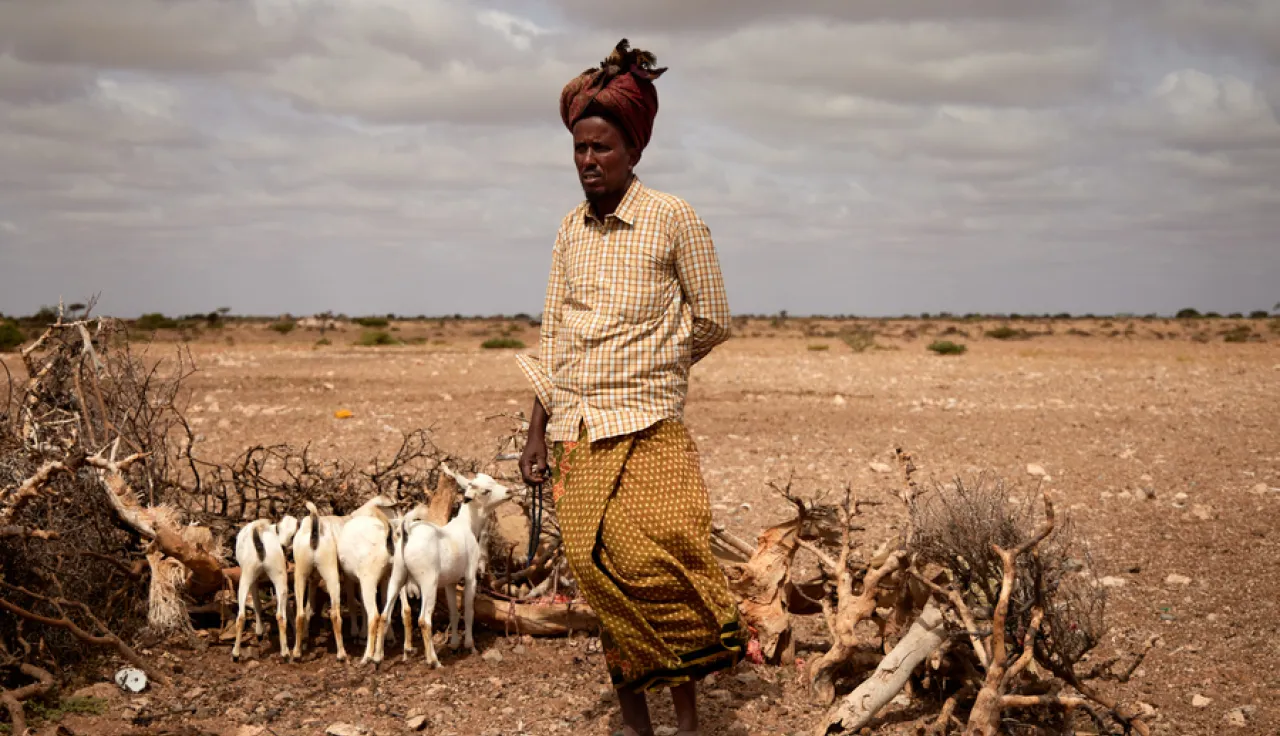
More than 17,300 Somali pastoralists have received financial assistance worth $11.5 million over the past 12 months as authorities move to protect livestock and livelihoods from worsening drought conditions across the country.
The support was announced on Wednesday, November 18, 2026, under a regional programme designed to help pastoral communities withstand the effects of drought, climate change and other shocks that threaten their animals and sources of income.
The financial assistance included livestock insurance payouts, savings incentives, profit-sharing payments and other forms of support aimed at helping herders remain financially stable during difficult periods.
Somalia’s Ministry of Finance Director-General Suleymaan Sheikh Omar said the initiative was helping pastoralists protect their animals by providing them with money to purchase essential supplies, particularly water and animal feed.
He explained that livestock insurance was becoming an important safety net for communities whose livelihoods depended heavily on animals and who faced significant financial losses whenever drought affected grazing land and water sources.
The programme, known as De-risking, Inclusion and Value Enhancement of Pastoral Economies (DRIVE), seeks to expand access to livestock insurance and financial services among pastoralists across the Horn of Africa.
Through the initiative, herders can receive financial compensation when drought and other conditions threaten their livestock, helping them avoid selling animals at significantly reduced prices or losing entire herds.
The programme also encourages pastoralists to participate in savings schemes and other financial services that can help them manage emergencies and recover from climate-related shocks.
Somalia is among four countries participating in the World Bank-funded initiative, alongside Kenya, Ethiopia and Djibouti.
The programme has a combined budget of approximately $360 million across the four countries, with funding directed towards strengthening pastoral economies and improving the resilience of communities that depend on livestock production.
The initiative comes as pastoral communities across the region continue to face increasingly unpredictable weather patterns, prolonged dry spells and the risk of livestock deaths caused by inadequate water and pasture.
For many Somali households, livestock are their primary source of income, food and wealth, making drought particularly devastating when animals become weak, die or are sold at low prices because of deteriorating conditions.