


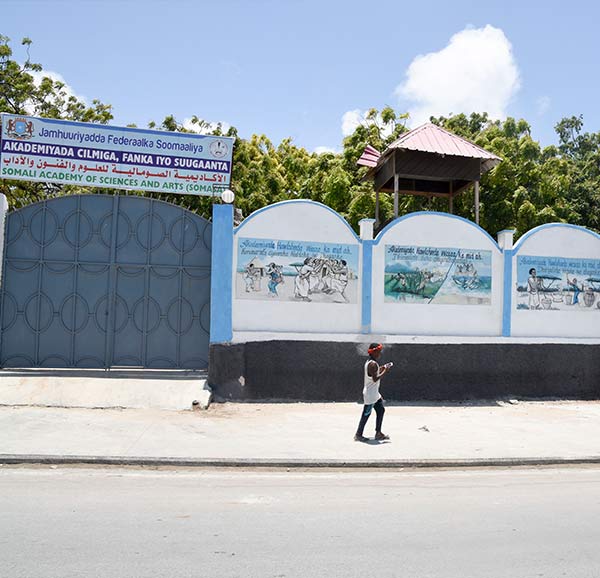
Somalia is considering a fresh look at the legal framework governing its arts and literature sector, with the country’s leading cultural institution warning that existing laws need to catch up with the realities facing artists, poets and other creatives.
The Somali Academy of Sciences, Culture, Arts and Literature has called for the law governing the sector to be reviewed, opening the possibility of renewed debate in the country’s Council of Ministers and Federal Parliament.
The push has brought questions surrounding creative ownership and the rights attached to older Somali songs into sharper focus, particularly as the country seeks to preserve its cultural heritage while adapting to a changing creative environment.
Academy Chairman Osman Yusuf Osman said the legislation could be returned to government institutions for fresh consideration before being subjected to the formal legislative approval process.
He made the remarks during a symposium in Mogadishu attended by poets, academics and members of the academy, where participants examined the state of Somali arts and literature and the challenges confronting those working in the sector.
Osman said renewing the law would provide an opportunity to address some of the difficulties facing artists while strengthening the legal protection surrounding creative works.
“The law needs to be renewed so that it can address the challenges facing artists and the arts sector, including issues surrounding creative rights and claims of ownership over older Somali songs,” Osman said.
The academy chairman was speaking as cultural institutions in Somalia increasingly grapple with the challenge of protecting works created decades ago while ensuring that the people behind them, or those legally entitled to their works, are properly recognised.
The debate also touches on a wider question of how Somalia should preserve its artistic heritage at a time when old music, poetry and other cultural material can be reproduced and circulated far more easily through digital platforms.
Participants at the Mogadishu symposium therefore placed emphasis on strengthening the position of arts and literature within Somali society, while calling for greater cooperation among institutions responsible for culture and creative development.
The discussions also highlighted the role of poets and artists in safeguarding Somalia’s cultural identity, with participants arguing that the development of the creative sector should go hand in hand with the protection of the country’s literary and artistic heritage.
The proposed review comes against a broader push to preserve Somalia’s cultural record. The country has been working to strengthen cultural institutions and digitise historical material, including large collections of old audio recordings containing music, poetry, drama and other material. A 2025 UN report noted that only about a quarter of Radio Muqdisho’s 225,000 old audio tapes had been digitised, underlining the scale of the challenge facing the preservation of Somalia’s cultural archives.